
Dockside Introduces Voza: A Smarter Way to Manage Your Property

At Dockside, we are always looking at ways to improve the service we provide to landlords, tenants, buyers and sellers. As part of this, we are pleased to introduce Voza, our new property management and customer communication platform.

Voza brings together the latest property technology, integrated communication tools and artificial intelligence to make managing your property simpler, quicker and more transparent.

Our aim is straightforward: to make moving, letting, selling and managing property easier for everyone.

Everything you need, in one place

One of the biggest advantages of Voza is that customers can access the information they need without having to pick up the phone or search through emails.

Whether you are a landlord managing an investment property, a tenant reporting an issue or a seller wanting to know how their sale is progressing, the information is available through one platform. Landlords will be able to access important property information, documents, invoices and updates at their fingertips, helping make managing a property much more straightforward.

Tenants will also have access to their own online area, giving them a simple way to communicate with Dockside and manage many aspects of their tenancy.

Smarter repairs with AI

One of the areas where we expect Voza to make a particularly significant difference is repairs and maintenance.

Tenants can report an issue directly through the platform, including uploading photographs and providing information about the problem. The integrated AI technology can then help identify and understand the issue and, in certain circumstances, provide guidance to the tenant on what may be causing the problem.

This could help resolve simple issues without the need for an unnecessary contractor visit. For example, something that may initially appear to be a repair could sometimes be caused by a simple issue that the tenant can resolve themselves.

The aim is not to replace our property management team or qualified contractors. Instead, the technology helps us gather better information at the start of the process, allowing the right people to deal with the right issue more efficiently.

Where a contractor is required, the tenant can still raise the repair through the platform and track its progress.

Better communication through WhatsApp

We know that people communicate differently today, and many customers would rather send a WhatsApp message than make a phone call.

Voza has WhatsApp integrated directly into the platform, allowing communication to be handled more efficiently. This means that customers can communicate with the relevant Dockside team without having to spend time trying to find the right person or repeatedly call the office.

For our team, it also means conversations and information can be managed within the same system, helping us provide a more joined up service.

What can you do through Voza?

The platform is designed to bring a wide range of property services together in one place.

  • Log an issue, upload photographs and track what is happening with your repair.
  • Make rent, deposit and other payments securely through the platform.
  • Raise a ticket
  • Have another question or issue? Raise a ticket and our team can pick it up.
  • Live chat with Dockside
  • Communicate directly with the team looking after your property.
  • Property alerts
  • Register your requirements and receive alerts when suitable new properties become available.

Landlords will have access to a central place for their property information, helping make the management of their investment considerably easier.

  • View invoices
  • See invoices and payment history in one place.
  • Important documents, invoices and property information can be accessed through the platform rather than having to search through emails or contact the office for every individual document.
  • Landlords can also benefit from improved visibility of repairs and other activity relating to their property.

The aim is to give landlords greater control and a clearer picture of what is happening with their investment.

Selling your property through Voza

  • Voza is not just about lettings and property management.
  • For sellers, the platform provides greater visibility throughout the sales process.
  • Track sales progress
  • Follow important milestones throughout your sale, including offers and contract progression.
  • Track buyer feedback
  • See feedback from viewings rather than simply being told how many people attended.
  • Instant valuation
  • Get an indication of what your property could be worth.
  • Instruct Dockside

Ready to sell or let? The platform makes it easier to take the next step.

This additional transparency means sellers can stay better informed throughout the process.

Technology that supports our people While technology is at the heart of Voza, we do not believe technology should replace personal service. Property is still a people business.

Buying a home, selling a property or managing a rental property can involve important decisions and sometimes complicated situations. Our team remains available when customers need advice, support or someone to speak to. Voza is designed to support our staff rather than replace them.

By automating some of the simpler processes and bringing information together, our team can spend more time dealing with the things where experience, knowledge and personal communication really matter.

A better experience for everyone

For landlords, it means easier access to information and greater visibility of their properties.

For tenants, it means simpler communication, easier reporting of repairs and greater visibility of what is happening.

For sellers and buyers, it provides more information and transparency throughout the sales process.

And for Dockside, it gives our teams the tools to provide a faster, more connected service.

This is just the beginning.

As Voza develops and the use of AI within the platform continues to improve, we expect to introduce further features that will make managing property even easier.

What happens next?

There is nothing you need to do just yet.

Over the coming weeks, we will be gradually moving our customers across to the new Voza platform.

Look out for your invitation to join Voza.

The rollout will take place between now and the end of October 2026, with customers being invited to activate their accounts as the process reaches their property or service. Once you receive your invitation, you will be able to register and access the features available to you. We will also provide further information and guidance throughout the rollout to help make the move to Voza as straightforward as possible.

We are excited to bring Voza to Dockside and look forward to showing our landlords, tenants, buyers and sellers how it can make their property journey easier.
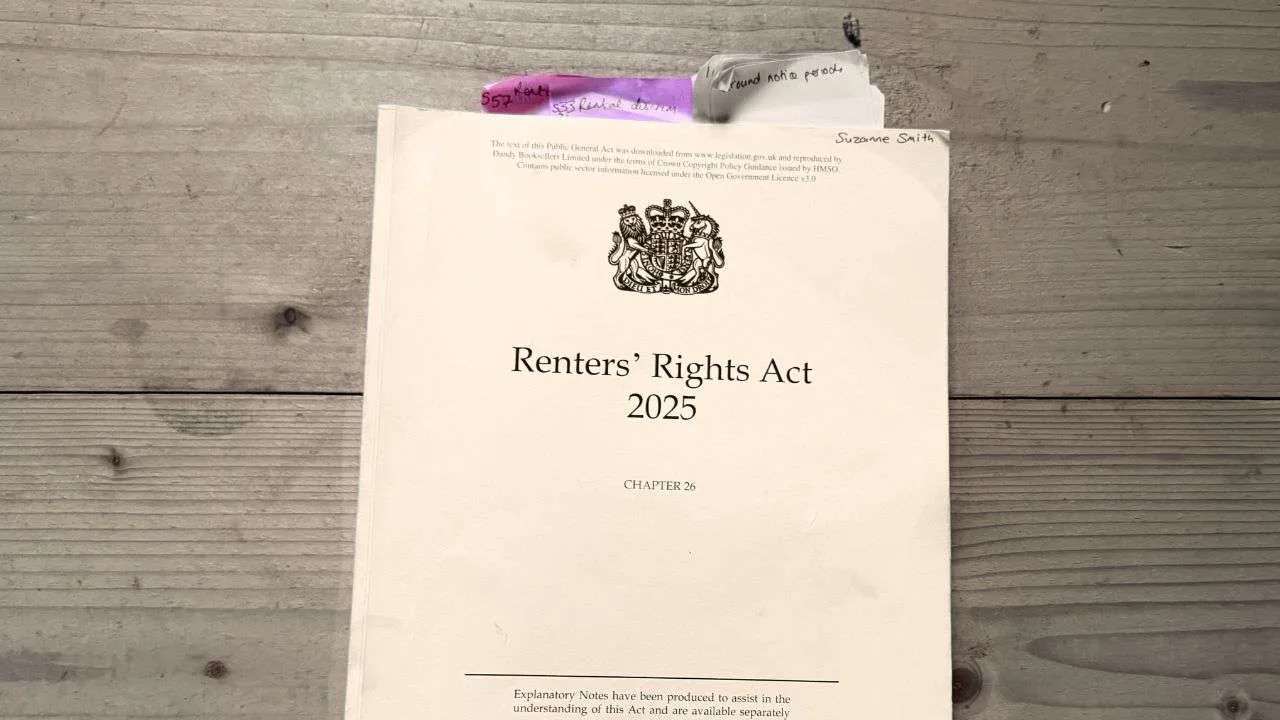

Renters’ Rights Act: What Landlords Need to Know in 2026

The private rented sector has undergone one of its biggest changes in decades, with the first major phase of the Renters’ Rights Act 2025 coming into force on 1 May 2026.

The legislation has changed the relationship between landlords and tenants, introducing greater security for renters while also creating new responsibilities and considerations for landlords.

With further changes due to be introduced, now is an important time for landlords to understand what has already changed, what is coming next and whether their own property is ready.

The biggest change: Section 21 has ended

Since 1 May 2026, landlords in England have no longer been able to use Section 21 notices to bring an assured shorthold tenancy to an end without giving a specific reason.

The previous fixed term assured shorthold tenancy system has also been replaced by assured periodic tenancies.

Under the new system, tenants generally have greater flexibility over how long they remain in a property, while landlords must rely on one of the available possession grounds if they need to regain possession.

This does not mean landlords have lost the ability to recover their property.

There are still possession grounds available for circumstances such as rent arrears, antisocial behaviour, breaches of tenancy obligations and where a landlord genuinely needs to sell or move into the property.

However, the process is now more structured, and landlords need to ensure that the correct ground and procedure are followed.

How is the Renters’ Rights Act affecting the rental market?

One of the biggest questions surrounding the reforms has been how landlords would respond.

The private rented sector was already facing significant cost pressures before the Renters’ Rights Act came into force. Higher borrowing costs, taxation changes, maintenance costs, insurance premiums and increasing compliance requirements have all affected the economics of being a landlord.

Some landlords have been reassessing their portfolios, while others are continuing to invest but taking a more professional approach to managing their properties.

For tenants, the availability of suitable rental properties remains an important issue. For landlords, the increasing cost and complexity of operating a rental property means that understanding the numbers and staying on top of compliance is more important than ever.

The market is therefore continuing to evolve as landlords and tenants adjust to the new rules.

Rental prices remain an important consideration

The Renters’ Rights Act has also introduced changes around rent increases and rental advertising.

Landlords and agents must ensure that properties are marketed appropriately and that rent increases follow the correct procedure.

This makes getting the market rent right particularly important.

Pricing a property too high can result in longer void periods and fewer applicants, while pricing too low can mean that a landlord is not achieving the property’s full market potential.

For landlords, the emphasis should therefore be on understanding the local market rather than simply looking at what another property is advertised for.

More responsibility for landlords and agents

The changes also place greater emphasis on compliance.

Landlords and agents now need to operate within the new tenancy framework, including the revised possession grounds, rent increase procedures and restrictions around rental discrimination and rental bidding.

There are also stronger enforcement powers and increased financial penalties for certain housing offences.

This makes professional property management increasingly important.

A good managing agent is not simply there to collect rent and arrange repairs. The role is increasingly about helping landlords understand changing legislation, maintain compliance, keep appropriate records and deal with issues before they become expensive problems.

More changes are coming

The changes introduced in May are not the end of the Renters’ Rights Act.

The Government is moving towards the second phase of implementation, which includes the introduction of the new Register Your Rental Property service, previously referred to as the Private Rented Sector Database.

The Government has confirmed that the service will begin rolling out regionally from 15 December 2026.

Registration will become a legal requirement for private landlords, with landlords required to provide information about themselves and their rental properties.

The database is expected to contain information about landlords, properties and relevant compliance information.

The Government has also confirmed an annual registration fee of £65 per property.

The rollout will take place region by region rather than requiring every landlord in England to register on the same day. Landlords will be given a registration window when the system reaches their area.

This means that landlords should start making sure their property records and compliance documentation are accurate and readily available.

A new Landlord Ombudsman is also coming

Another significant change planned under the Renters’ Rights Act is the creation of a Private Rented Sector Landlord Ombudsman.

The intention is to provide tenants and landlords with access to an alternative dispute resolution process, helping to resolve disputes without every matter having to progress towards court proceedings.

The Government’s implementation roadmap places the Ombudsman within the wider second phase of reforms, although mandatory landlord sign up is currently expected at a later stage.

This is another reason why keeping good records and maintaining clear communication with tenants is becoming increasingly important.

What should landlords be doing now?

For landlords, the message is simple: do not wait for the next change before reviewing your portfolio.

Landlords should consider:

Reviewing tenancy agreements and procedures

Make sure your current tenancy documentation and processes reflect the new tenancy regime.

Checking compliance

Review gas safety, electrical safety, EPC documentation, deposit protection and other property compliance requirements.

Reviewing rents

Make sure rents are in line with the current local market and understand the rules surrounding rent increases.

Reviewing possession procedures

If you may need to sell a property or move back into it, make sure you understand the relevant possession grounds and notice requirements before taking action.

Preparing property information

With the new rental property registration system being introduced, landlords should ensure that their property and compliance information is accurate and readily available.

Considering the long term

The rental market is becoming more regulated and landlords need to consider whether their properties remain suitable investments under the new regulatory environment.

What does this mean for landlords?

The Renters’ Rights Act represents a significant change to the way the private rented sector operates.

For tenants, the reforms provide greater security and additional protections.

For landlords, they create a greater need for good property management, accurate documentation and a clear understanding of the rules.

Some landlords may decide that the additional regulation and responsibilities are not right for them, while others may see the changes as an opportunity to operate more professionally and build longer term portfolios.

Ultimately, the rental market still depends on the same fundamentals: supply, demand, affordability and the cost of providing a property.

The legislation has changed the framework in which landlords operate, but it has not changed the importance of having a well maintained property, a suitable tenant, realistic rent and a professional approach to management.

Is Your Property Ready?

With so many changes taking place, it is understandable that landlords may be unsure whether their current arrangements are fully up to date or what the new rules mean for their individual property.

Every property and tenancy is different, so there is no one size fits all approach.

If you have concerns about your current tenancy, your property’s compliance, your rent or how the upcoming changes could affect you, the Dockside team is happy to have an informal conversation and help you understand what you may need to consider.

We are also offering landlords a free Property Check Up.

The check up provides an opportunity to look at your current property and tenancy arrangements, identify any areas that may need attention and discuss the changes that could affect you going forward.

There is no obligation to make any changes or move your property to Dockside. It is simply an opportunity to make sure you are prepared and have a clearer understanding of where you stand.

With further changes coming to the private rented sector, taking a little time now to review your position could help avoid unnecessary problems later.

If you would like to arrange a free Property Check Up or simply have a question about the Renters’ Rights Act, speak to the Dockside team. We are always happy to help.

Interest Rates, Mortgages and the Property Market: What Is Happening in London and Kent?

The UK property market is entering the autumn with a mixture of cautious optimism and continued affordability pressures. While interest rates have fallen significantly from their recent highs, mortgage costs remain an important factor influencing both buyers and sellers.

Interest rates remain a key factor

The Bank of England has held the Bank Rate at 3.75%, following its September meeting. However, the Bank has indicated that the outlook remains uncertain, particularly because of continued pressure from energy prices and inflation. UK inflation reached 3.1% in August, above the Bank of England’s 2% target. (⁠Bank of England)

For homeowners and buyers, the Bank Rate is only part of the story. Mortgage rates are also influenced by financial markets and expectations about future interest rates.

Rightmove’s latest figures show that the average two year fixed mortgage rate has increased to 5.29%, compared with 5.09% a month earlier. This increase is putting additional pressure on affordability, particularly for buyers who are borrowing at higher loan to value ratios. (⁠Rightmove)

For example, on a £300,000 mortgage, even relatively small changes in mortgage rates can make a noticeable difference to monthly repayments. This is one reason why buyers are continuing to be careful about how much they are prepared to spend.

What does this mean for house prices?

The latest market figures suggest that we are not seeing one uniform UK property market.

Rightmove reported that average asking prices across Great Britain increased by 0.7% in September to £367,440. This was the first monthly increase since May and could be an early indication of the traditional autumn improvement in activity.

However, prices remain 0.8% lower than they were a year ago, while the number of properties available for sale is at a 12 year high for this time of year. Buyer enquiries are also 9% lower than they were a year ago. (⁠Rightmove)

This combination of higher stock levels and more cautious buyers means that sellers are having to compete harder for attention.

London remains under pressure

London continues to be one of the more challenging parts of the UK property market.

The latest official HM Land Registry figures show that London house prices were 3.3% lower in July 2026 than a year earlier, with the average London property priced at approximately £569,000. This was the eleventh consecutive month in which London recorded an annual fall in prices. (⁠Office for National Statistics)

Rightmove’s September figures show some improvement in asking prices, with the average London asking price reaching £657,775, an increase of 1.8% compared with August.

However, this remains 2.6% below the same point last year. Rightmove also reports that only 42% of properties currently on the market in London have successfully found a buyer, compared with considerably higher proportions in some other parts of Great Britain. (⁠Rightmove)

This highlights an important point for London sellers: a rise in asking prices does not necessarily mean that completed sale prices are increasing at the same rate.

Kent is showing greater resilience

Kent is currently presenting a somewhat different picture.

The latest HM Land Registry figures put the average Kent property price at approximately £346,904, representing annual growth of 1.5%. (⁠GOV.UK)

The wider South East market is still experiencing some pressure, with Rightmove reporting an average asking price of £471,138 in September. This was 0.3% higher than August but 1.8% lower than a year earlier. (⁠Rightmove)

Kent’s relative affordability compared with London can be an important factor. For buyers who have flexibility over location, the ability to obtain more property for their money can make areas of Kent attractive, particularly where transport links provide access to London.

Buyers are still buying

Despite the challenges, there is certainly evidence that buyers remain active.

September has traditionally been an important period for the property market as people return from the summer holidays and reassess their moving plans. Rightmove’s latest figures suggest that buyer activity has picked up, although there is still a significant amount of stock competing for those buyers. (⁠Rightmove)

For buyers, this can create opportunities.

There is more choice available than we have seen for many years, and sellers are increasingly having to price properties realistically to attract offers. For those with a suitable mortgage agreement and a clear idea of what they can afford, the current market may provide more negotiating room than was available during the stronger seller markets of previous years.

What should sellers be doing?

For sellers, the message from the current market is relatively straightforward: pricing correctly from the beginning is more important than ever.

With high levels of available property and buyers remaining conscious of mortgage costs, an ambitious asking price can result in a property sitting on the market while competing properties attract the available buyers.

Rightmove reports that 74% of properties that have sold so far this year were priced correctly when they first came to market and did not subsequently require an asking price reduction. (⁠Rightmove)

This reinforces the importance of understanding the local market rather than simply looking at what other properties are being advertised for.

The outlook

The autumn market could provide some renewed activity, but there are still several factors that buyers and sellers need to consider.

Mortgage rates remain significantly higher than many homeowners became accustomed to before the recent period of inflation. At the same time, inflation remains above target and the Bank of England has indicated that there is considerable uncertainty surrounding the economic outlook. (⁠Bank of England)

For London, affordability pressures continue to weigh on prices and transaction activity.

Kent, meanwhile, is showing more resilience, with the latest official figures showing modest annual price growth.

The overall picture is therefore one of a more balanced property market. Buyers have more choice, sellers need to be realistic on price and mortgage affordability remains central to the decisions being made.

At Dockside, we believe that understanding what is actually happening in your local market is more important than relying on national headlines. Whether you are considering selling, buying, letting or reviewing your property investment, a local valuation and up to date market assessment can help you understand where your property sits in the current market.

Back to top ⇧